443
elected councillors
130
constituencies
6 years
term of office
90
AFE members
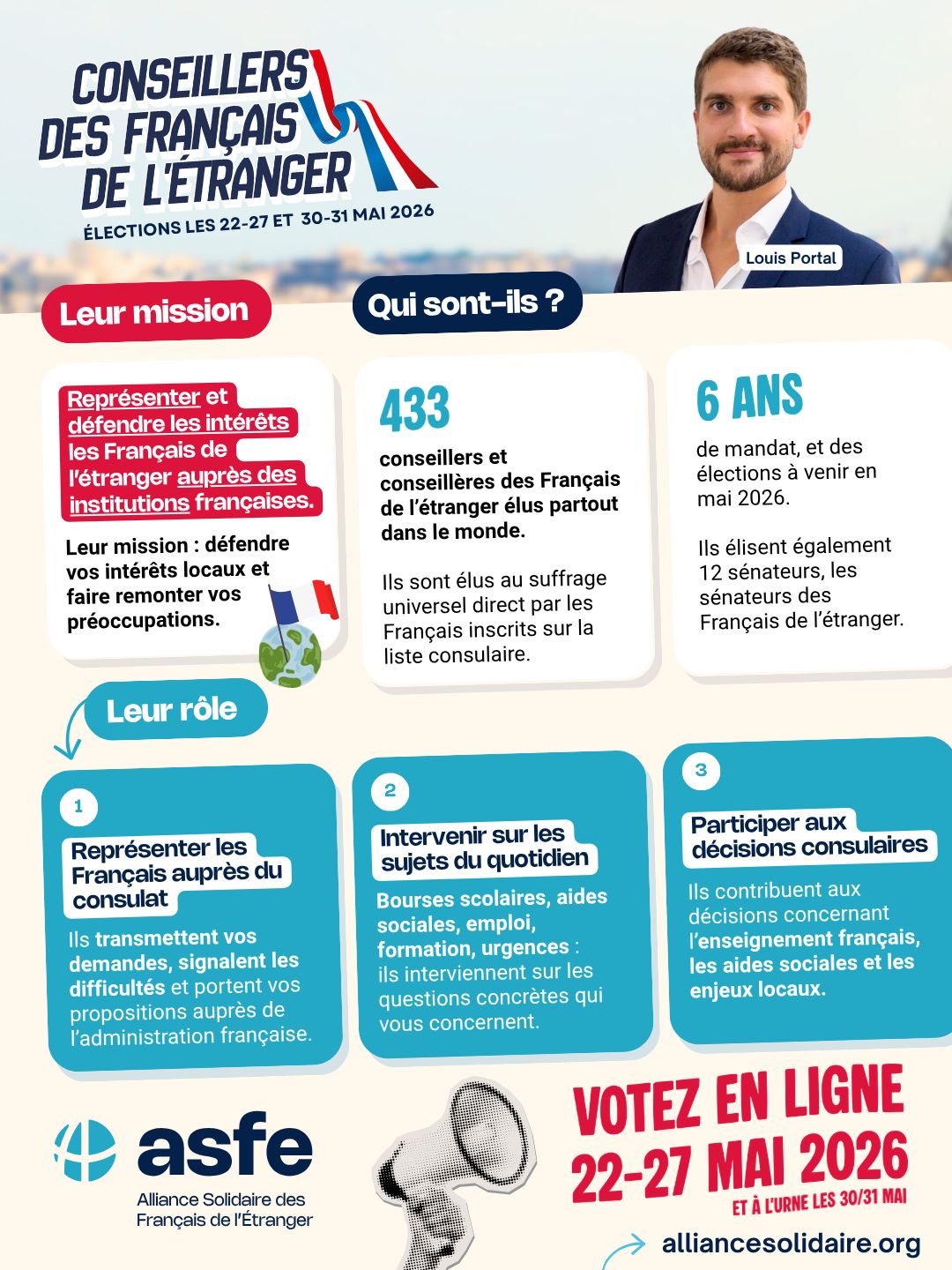
Councillors for French Citizens Abroad are locally elected representatives, created by the law of July 22, 2013. Elected by direct universal suffrage on gender-equal lists, for a 6-year term, by French citizens registered on consular electoral rolls, there are currently 443 spread across 130 constituencies worldwide (433 for the next election in May 2026).
Who are they?
- French citizens living abroad, elected by their compatriots living overseas
- Each consular constituency has 1 to 9 councillors, depending on the number of registered French citizens
- They serve largely on a voluntary basis, with a modest flat-rate allowance to cover travel expenses
What do they do on a daily basis?
- They represent and assist French citizens in their constituency with their dealings with the embassy or consulate
- They sit on the consular council, the local body that meets at least twice a year to address concrete issues: school grants, social assistance, employment and vocational training, security, support for associations (STAFE)
- They issue advisory opinions and make recommendations on all matters affecting the lives of French citizens in their constituency
- They relay the needs and concerns from the field to the administration, government, and parliamentarians
- They contribute to local civic and associative life and support concrete initiatives
What role in national representation?
- They are grand electors and participate in the election of the 12 senators for French citizens abroad
- Among the 443 councillors, 90 are elected by their peers to sit on the Assembly of French Citizens Abroad (AFE), the national consultative assembly that dialogues directly with the government on all public policies concerning French citizens abroad
- They work alongside the 11 members of parliament for French citizens abroad
In summary, they are the equivalent of municipal councillors, but for French communities abroad - your direct contacts at the consular level.